2) Next, compose a thoughtful blog post using evidence from the text and anything from the documentary I am Not Your Negro (2017) in an attempt to explore one of the complex issues Baldwin examined in his discussion of race in America. As stated before, be okay with feeling uncomfortable. Ask questions. Look for feedback. Practice kindness. We can discuss these matters with passion AND civility.
Tuesday, September 17, 2019
Due Thursday, September 19th - "Going to Meet the Man" by James Baldwin
Directions: 1) Read "Going to Meet the Man" by James Baldwin.
2) Next, compose a thoughtful blog post using evidence from the text and anything from the documentary I am Not Your Negro (2017) in an attempt to explore one of the complex issues Baldwin examined in his discussion of race in America. As stated before, be okay with feeling uncomfortable. Ask questions. Look for feedback. Practice kindness. We can discuss these matters with passion AND civility.
Thursday, September 12, 2019
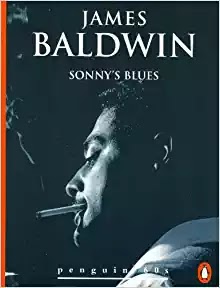
Due Monday, September 16th - "Sonny's Blues" by James Baldwin
Overview: I would like you to explore the work of James Baldwin. He is an important writer. Period. Toni Morrison wrote of his influence on her work as an author, and we need his voice today more than ever. He cut through the "single story" and examined what Margaret Atwood called "the how and why." He spoke publicly, wrote essays, and got to the heart of American racism through literature.
Directions: 1) Read "Sonny's Blues" by James Baldwin.
2) Next, compose a thoughtful blog post using evidence from the text and anything from the documentary I am Not Your Negro (2017) in an attempt to explore one of the complex issues Baldwin examined in his discussion of race in America. Be okay with feeling uncomfortable. Ask questions. Look for feedback. Also, practice kindness. We can discuss these matters with passion AND civility.
3) Also, peruse the additional materials, including the musicians referenced in the short story: Charlie Parker and Louis Armstrong, along with a list of influential artists I love from the past and present. Comment on one that resonated with you in your blog post.
We will begin viewing the documentary. In 1979, James Baldwin wrote a letter to his literary agent describing his next project, "Remember This House." The book was to be a revolutionary, personal account of the lives and assassinations of three of his close friends: Medgar Evers, Malcolm X and Martin Luther King, Jr. At the time of Baldwin's death in 1987, he left behind only 30 completed pages of this manuscript. Filmmaker Raoul Peck envisions the book James Baldwin never finished. How can Baldwin's ideas be used to inform us today? Can you cite instances in the documentary that opened your eyes, and show us how you see this drama playing out in 2018?
The first-person narrator of "Sonny's Blues" tells the story of his relationship with his younger brother, Sonny. The story begins with narrator, saddened by his brother's choices, reflecting back on their childhood, wondering what caused his brother to become an addict. How does Baldwin use jazz as a means of discussing the complex emotions of his characters? This is the most anthologized of Baldwin's stories. However, how would this story end up perpetuating "the danger of the single story?"
Article: “Sonny’s Blues” by James Baldwin —“The most famous jazz short story ever written”
December 6th, 2013, from Jerry Jazz Musician
In the introduction to The Jazz Fiction Anthology, editors Sascha Feinstein and David Rife cite James Baldwin’s short story “Sonny’s Blues” as “the most famous jazz short story ever written,” and is pointed to by Baldwin biographer David Leeming as “the prologue to a dominant fictional motif in the overall Baldwin story, the relationship between two brothers that takes much of its energy from the close relationship between James and [brother] David Baldwin.” The story, originally published in Partisan Review in 1957, centers on the narrator’s need to, in Leeming’s words, “save his brother [Sonny] from the precariousness of his life as an artist.” Sonny, in turn, finds his voice by playing bebop in the Village, which results, according to Leeming, in the narrator seeing “that the artist, especially the black artist, is a prophet of freedom, not only of freedom for his own race but of freedom for all those suffocating under the repressive blanket of emotional safety and innocence.”
Directions: 1) Read "Sonny's Blues" by James Baldwin.
2) Next, compose a thoughtful blog post using evidence from the text and anything from the documentary I am Not Your Negro (2017) in an attempt to explore one of the complex issues Baldwin examined in his discussion of race in America. Be okay with feeling uncomfortable. Ask questions. Look for feedback. Also, practice kindness. We can discuss these matters with passion AND civility.
3) Also, peruse the additional materials, including the musicians referenced in the short story: Charlie Parker and Louis Armstrong, along with a list of influential artists I love from the past and present. Comment on one that resonated with you in your blog post.
I Am Not Your Negro (2017)
The first-person narrator of "Sonny's Blues" tells the story of his relationship with his younger brother, Sonny. The story begins with narrator, saddened by his brother's choices, reflecting back on their childhood, wondering what caused his brother to become an addict. How does Baldwin use jazz as a means of discussing the complex emotions of his characters? This is the most anthologized of Baldwin's stories. However, how would this story end up perpetuating "the danger of the single story?"
Article: “Sonny’s Blues” by James Baldwin —“The most famous jazz short story ever written”
December 6th, 2013, from Jerry Jazz Musician
In the introduction to The Jazz Fiction Anthology, editors Sascha Feinstein and David Rife cite James Baldwin’s short story “Sonny’s Blues” as “the most famous jazz short story ever written,” and is pointed to by Baldwin biographer David Leeming as “the prologue to a dominant fictional motif in the overall Baldwin story, the relationship between two brothers that takes much of its energy from the close relationship between James and [brother] David Baldwin.” The story, originally published in Partisan Review in 1957, centers on the narrator’s need to, in Leeming’s words, “save his brother [Sonny] from the precariousness of his life as an artist.” Sonny, in turn, finds his voice by playing bebop in the Village, which results, according to Leeming, in the narrator seeing “that the artist, especially the black artist, is a prophet of freedom, not only of freedom for his own race but of freedom for all those suffocating under the repressive blanket of emotional safety and innocence.”
Meditative Journal: "A Barred Owl" and "How I Discovered Poetry"
Directions: Please carefully read the two poems, and comment on them in this blog space. Think about form, theme, dramatic situation, diction, syntax. Be mindful of how you approach a poem. Also, do you see anything that links these two poems together?
"A Barred Owl"
"A Barred Owl"
by Richard Wilbur
The warping night air having brought the boom
Of an owl’s voice into her darkened room,
We tell the wakened child that all she heard
Was an odd question from a forest bird,
Asking of us, if rightly listened to,
“Who cooks for you?” and then “Who cooks for you?”
Words, which can make our terrors bravely clear,
Can also thus domesticate a fear,
And send a small child back to sleep at night
Not listening for the sound of stealthy flight
Or dreaming of some small thing in a claw
Borne up to some dark branch and eaten raw.
The warping night air having brought the boom
Of an owl’s voice into her darkened room,
We tell the wakened child that all she heard
Was an odd question from a forest bird,
Asking of us, if rightly listened to,
“Who cooks for you?” and then “Who cooks for you?”
Words, which can make our terrors bravely clear,
Can also thus domesticate a fear,
And send a small child back to sleep at night
Not listening for the sound of stealthy flight
Or dreaming of some small thing in a claw
Borne up to some dark branch and eaten raw.
"How I Discovered Poetry"
by Marilyn Nelson
It was like soul-kissing, the way the words
filled my mouth as Mrs. Purdy read from her desk.
All the other kids zoned an hour ahead to 3:15,
but Mrs. Purdy and I wandered lonely as clouds borne
by a breeze off Mount Parnassus. She must have seen
the darkest eyes in the room brim: The next day
she gave me a poem she’d chosen especially for me
to read to the all except for me white class.
She smiled when she told me to read it, smiled harder,
said oh yes I could. She smiled harder and harder
until I stood and opened my mouth to banjo playing
darkies, pickaninnies, disses and dats. When I finished
my classmates stared at the floor. We walked silent
to the buses, awed by the power of words.
It was like soul-kissing, the way the words
filled my mouth as Mrs. Purdy read from her desk.
All the other kids zoned an hour ahead to 3:15,
but Mrs. Purdy and I wandered lonely as clouds borne
by a breeze off Mount Parnassus. She must have seen
the darkest eyes in the room brim: The next day
she gave me a poem she’d chosen especially for me
to read to the all except for me white class.
She smiled when she told me to read it, smiled harder,
said oh yes I could. She smiled harder and harder
until I stood and opened my mouth to banjo playing
darkies, pickaninnies, disses and dats. When I finished
my classmates stared at the floor. We walked silent
to the buses, awed by the power of words.
Monday, September 9, 2019
Due Thursday, September 12th - "Recitatif" by Toni Morrison
Compose an argument to be posted in this blog space using one of the following prompts. Use 2-3 direct quotations, and your notes in your response.
Prompts from Past Exams
1986. Some works of literature use the element of time in a distinct way. The chronological sequence of events may be altered, or time may be suspended or accelerated. Choose a novel, an epic, or a play of recognized literary merit and show how the author's manipulation of time contributes to the effectiveness of the work as a whole. Do not merely summarize the plot.
1987. Some novels and plays seem to advocate changes in social or political attitudes or in traditions. Choose such a novel or play and note briefly the particular attitudes or traditions that the author apparently wishes to modify. Then analyze the techniques the author uses to influence the reader's or audience's views. Avoid plot summary.
1988. Choose a distinguished novel or play in which some of the most significant events are mental or psychological; for example, awakenings, discoveries, changes in consciousness. In a well-organized essay, describe how the author manages to give these internal events the sense of excitement, suspense, and climax usually associated with external action. Do not merely summarize the plot.
Thursday, September 5, 2019
Due Tuesday, September 10th - "The Danger of the Single Story" and the Importance of Becoming Global Citizens
Overview: Every story is just a piece of the larger story of our lives. Yet, we tend to judge people's lives on moments. We do the same with literature.
Directions: Please view "The Danger of a Single Story" by Chimamanda Ngozi Adichie and comment in this blog space on the ways in which we judge others/authors/characters by a single story. Think about people that you have judged by one moment. How do you define them? Now, think about novels. How have you judged authors/characters by a single reading? Have you had any experiences where your opinion changed for people and authors?
Next, peruse my global website. Feel free to comment on something you found interesting and would like to ask me for more information. You may also share the site o social media if you find something that touches you. I appreciate the feedback.
Culture. The word originated with the definition"to cultivate land," and evolved into a "cultivation of the mind." Today the word is ambiguous, referring to our attachment to a place, traditions, and beliefs. It also has ominously been used to discuss an "otherness" through stereotypes.
Chimamanda Ngozi Adichie shares her experiences with the notion of culture in "The Danger of a Single Story" in an important TED Talk that will explain the importance of global intelligence.
Directions: Please view "The Danger of a Single Story" by Chimamanda Ngozi Adichie and comment in this blog space on the ways in which we judge others/authors/characters by a single story. Think about people that you have judged by one moment. How do you define them? Now, think about novels. How have you judged authors/characters by a single reading? Have you had any experiences where your opinion changed for people and authors?
Next, peruse my global website. Feel free to comment on something you found interesting and would like to ask me for more information. You may also share the site o social media if you find something that touches you. I appreciate the feedback.
"The Danger of a Single Story"
by Chimamanda Ngozi Adichie
Culture. The word originated with the definition"to cultivate land," and evolved into a "cultivation of the mind." Today the word is ambiguous, referring to our attachment to a place, traditions, and beliefs. It also has ominously been used to discuss an "otherness" through stereotypes.
Chimamanda Ngozi Adichie shares her experiences with the notion of culture in "The Danger of a Single Story" in an important TED Talk that will explain the importance of global intelligence.
"Mr. P. Goes Global"
by Eric Pellerin
Tuesday, September 3, 2019
Due Thursday, September 5th - Telling a Story
"Introduction to Poetry"
by Billy Collins
I ask them to take a poem
and hold it up to the light
like a color slide
or press an ear against its hive.
I say drop a mouse into a poem
and watch him probe his way out,
or walk inside the poem's room
and feel the walls for a light switch.
I want them to waterski
across the surface of a poem
waving at the author's name on the shore.
But all they want to do
is tie the poem to a chair with rope
and torture a confession out of it.
They begin beating it with a hose
to find out what it really means.
I ask them to take a poem
and hold it up to the light
like a color slide
or press an ear against its hive.
I say drop a mouse into a poem
and watch him probe his way out,
or walk inside the poem's room
and feel the walls for a light switch.
I want them to waterski
across the surface of a poem
waving at the author's name on the shore.
But all they want to do
is tie the poem to a chair with rope
and torture a confession out of it.
They begin beating it with a hose
to find out what it really means.
Overview: In "The Zebra Storyteller," Spenser Holst states that the purpose of stories is to prepare us for the
unexpected. Though the storyteller thinks he is just spinning stories out of
his own imagination, in order to amuse, his stories prove to be practical.
Other storytellers make the function of fiction less
extraordinary. According to them, fiction enables readers to avoid projecting
false hopes and fears and shows them what they can actually
expect in their everyday lives, so that they can prepare themselves.
What else do you see in this symbolic piece of meta-fiction?
In "Happy Endings," Margaret Atwood (author of The Handmaid's Tale) addresses our need for closure as we read fiction. What makes for an appropriate ending to a work of fiction? What are we looking for? What should we be looking for? Atwood suggests how and why.
What does she mean by that?
Directions: Please read and study the following pieces of short fiction. Next, in this blog space, please discuss an idea from Holst and an idea from Atwood using one of the summer reading selections. Engage with each other. Use the text. Be genuine and authentic. Think about the value of words by being concise. Think about your audience. Also, revisit the blog. Read and respond to your fellow classmates. Get a dialogue going. Challenge each other. Be bold. Be brilliant.
"The Zebra Storyteller"
by Spencer Holst
Once upon a time there was a Siamese cat who pretended to be
a lion and spoke inappropriate Zebraic.
That language is whinnied by the race of striped horses in
Africa.
Here now: An innocent zebra is walking in a jungle and
approaching from another direction is the little cat; they meet.
"Hello there!" says the Siamese cat in perfectly
pronounced Zebraic. "It certainly is a pleasant day, isn't it? The sun is
shining, the birds are singing, isn't the world a lovely place to live
today!"
The zebra is so astonished at hearing a Siamese cat speaking
like a zebra, why-he's just fit to be tied.
So the little cat quickly ties him up, kills him, and drags
the better parts of the carcass back to his den.
The cat successfullyhunted zebras manymonths in this manner,
dining on filet mignon of zebra everynight, and from the better hides he made
bow neckties and wide belts after the fashion of the decadent princes of the
Old Siamese court.
He began boasting to his friends he was a lion, and he gave
them as proof the fact that he hunted zebras.
The delicate noses of the zebras told them there was really
no lion in the neighborhood. The zebra deaths caused many to avoid the region.
Superstitious, they decided the woods were haunted by the ghost of a lion.
One day the storyteller of the zebras was ambling, and
through his mind ran plots for stories to amuse the other zebras, when suddenly
his eyes brightened, and he said, "That's it! I'll tell a story about a
Siamese cat who learns to speak our language! What an idea! that'll make 'em
laugh!"
Just then the Siamese cat appeared before him, and said,
"Hello there! Pleasant day today, isn't it!"
The zebra storyteller wasn't fit to be tied at bearing a cat
speaking his language, because he'd been thinking about that veryt hing.
He took a good look at the cat, and he didn't know why, but
there was something about his looks be didn't like, so he kicked him with a
hoof and killed him.
That is the function of the storyteller.
"Happy Endings"
by Margaret Atwood
John and Mary meet. What happens next? If you want a happy
ending, try A.
A.
John and Mary fall in love and get married. They both have
worthwhile and remunerative jobs which they find stimulating and challenging.
They buy a charming house. Real estate values go up. Eventually, when they can
afford live-in help, they have two children, to whom they are devoted. The
children turn out well. John and Mary have a stimulating and challenging sex
life and worthwhile friends. They go on fun vacations together. They retire.
They both have hobbies which they find stimulating and challenging. Eventually
they die. This is the end of the story.
B.
Mary falls in love with John but
John doesn't fall in love with Mary. He merely uses her body for selfish
pleasure and ego gratification of a tepid kind. He comes to her apartment twice
a week and she cooks him dinner, you'll notice that he doesn't even consider
her worth the price of a dinner out, and after he's eaten dinner he fucks her
and after that he falls asleep, while she does the dishes so he won't think
she's untidy, having all those dirty dishes lying around, and puts on fresh
lipstick so she'll look good when he wakes up, but when he wakes up he doesn't
even notice, he puts on his socks and his shorts and his pants and his shirt
and his tie and his shoes, the reverse order from the one in which he took them
off. He doesn't take off Mary's clothes, she takes them off herself, she acts
as if she's dying for it every time, not because she likes sex exactly, she
doesn't, but she wants John to think she does because if they do it often
enough surely he'll get used to her, he'll come to depend on her and they will
get married, but John goes out the door with hardly so much as a good-night and
three days later he turns up at six o'clock and they do the whole thing over
again. Mary gets run-down. Crying is bad for your face, everyone knows that and
so does Mary but she can't stop. People at work notice. Her friends tell her
John is a rat, a pig, a dog, he isn't good enough for her, but she can't
believe it. Inside John, she thinks, is another John, who is much nicer. This
other John will emerge like a butterfly from a cocoon, a Jack from a box, a pit
from a prune, if the first John is only squeezed enough. One evening John
complains about the food. He has never complained about her food before. Mary
is hurt. Her friends tell her they've seen him in a restaurant with another
woman, whose name is Madge. It's not even Madge that finally gets to Mary: it's
the restaurant. John has never taken Mary to a restaurant. Mary collects all
the sleeping pills and aspirins she can find, and takes them and a half a
bottle of sherry. You can see what kind of a woman she is by the fact that it's
not even whiskey. She leaves a note for John. She hopes he'll
discover her and get her to the hospital in time and repent and then they can
get married, but this fails to happen and she dies. John marries Madge and
everything continues as in A.
C.
John, who is an older man, falls in love with
Mary, and Mary, who is only twenty-two, feels sorry for him because he's
worried about his hair falling out. She sleeps with him even though she's not
in love with him. She met him at work. She's in love with someone called James,
who is twenty-two also and not yet ready to settle down. John on the contrary
settled down long ago: this is what is bothering him. John has a steady,
respectable job and is getting ahead in his field, but Mary isn't impressed by
him, she's impressed by James, who has a motorcycle and a fabulous record
collection. But James is often away on his motorcycle, being free. Freedom
isn't the same for girls, so in the meantime Mary spends Thursday evenings with
John. Thursdays are the only days John can get away. John is married to a woman
called Madge and they have two children, a charming house which they bought
just before the real estate values went up, and hobbies which they find stimulating
and challenging, when they have the time. John tells Mary how important she is
to him, but of course he can't leave his wife because a commitment is a
commitment. He goes on about this more than is necessary and Mary finds it
boring, but older men can keep it up longer so on the whole she has a fairly
good time. One day James breezes in on his motorcycle with some top-grade
California hybrid and James and Mary get higher than you'd believe possible and
they climb into bed. Everything becomes very underwater, but along comes John,
who has a key to Mary's apartment. He finds them stoned and entwined. He's
hardly in any position to be jealous, considering Madge, but nevertheless he's
overcome with despair. Finally he's middle-aged, in two years he'll be as bald
as an egg and he can't stand it. He purchases a handgun, saying he needs it for
target practice-this is the thin part of the plot, but it can be dealt with
later--and shoots the two of them and himself. Madge, after a suitable period
of mourning, marries an understanding man called Fred and everything continues
as in A, but under different names.
D.
Fred and Madge have no problems. They
get along exceptionally well and are good at working out any little
difficulties that may arise. But their charming house is by the seashore and
one day a giant tidal wave approaches. Real estate values go down. The rest of
the story is about what caused the tidal wave and how they escape from it. They
do, though thousands drown, but Fred and Madge are virtuous and grateful, and
continue as in A.
E.
Yes, but Fred has a bad heart. The rest of the story is
about how kind and understanding they both are until Fred dies. Then Madge
devotes herself to charity work until the end of A. If you like, it can be
"Madge," "cancer," "guilty and confused," and
"bird watching."
F.
If you think this is all too bourgeois, make John
a revolutionary and Mary a counterespionage agent and see how far that gets
you. Remember, this is Canada. You'll still end up with A, though in between
you may get a lustful brawling saga of passionate involvement, a chronicle of
our times, sort of.
You'll have to face it, the endings are the same however
you slice it. Don't be deluded by any other endings, they're all fake, either
deliberately fake, with malicious intent to deceive, or just motivated by
excessive optimism if not by downright sentimentality. The only authentic
ending is the one provided here:
John and Mary die. John and Mary die. John and
Mary die.
So much for endings. Beginnings are always more fun. True
connoisseurs, however, are known to favor the stretch in between, since it's
the hardest to do anything with. That's about all that can be said for plots,
which anyway are just one thing after another, a what and a what and a what.
Now try How and Why.
Subscribe to:
Posts (Atom)